


Thread lifting has emerged as an alternative to a non-surgical facelift. The aesthetic medicine market is dominated by two major thread types: PDO and PCL. The two offer aesthetic benefits by using minimal procedures to rejuvenate the face. Nonetheless, they differ significantly in composition, duration, and lifting capacity. When practitioners and patients understand these differences, critical treatment decisions can be reached. Learning about Thread Lift Foundations What Thread Lifts Do Thread lifts involve the placement of medical-grade threads beneath the skin to lift sagging tissue. The threads provide instant mechanical raising and also activate collagen regeneration. The combination of the two produces both immediate and gradual outcomes. How They Work Practitioners insert needles through punctures to place threads. The fibers fasten to tissue, which produces tension upwards. New collagen is then formed around the threads as the body reacts to them. Even dissolved threads still produce this collagen. Common Treatment Areas Thread lifts treat the brow, neck, mid-face, and jowls. Hanging cheeks, jaws, and neck skin are also good candidates for treatment. The durability of thread lifts renders them suitable against addressing several age-related issues. PDO Threads Explained Material Composition PDO is an acronym for polydioxanone, a synthetic absorbable suture. Medical practitioners have been using PDO in surgery for decades. The safety profiles have been developed with a solid medical experience background. Absorption Timeline PDO threads disintegrate after 6 to 8 months of insertion. The body's natural hydrolytic processes break them down. Despite the disappearance of threads, collagen production continues to yield steady returns. Types of PDO Threads Mono threads are smooth and mainly stimulate collagen. The barbs on the cog threads provide mechanical lift. Screw thread comprises interlaced strands to improve volume. Each type has a specific purpose. PCL Threads Explained Material Composition PCL is an abbreviation for polycaprolactone, an additional biocompatible synthetic polymer. PCL degrades more slowly than PDO. The material is used in different medical equipment and implants. Absorption Timeline PCL threads take 12 to 24 months to be fully absorbed by the tissue. The extended stay offers mechanical support at a longer length. The slow deterioration ensures a lift during absorption. Thread Structure PCL threads are usually barbed to provide a firm grip in the tissues. Barbs are more effective at engaging tissue than smooth surfaces. This forceful anchoring generates strong, short-acting lifting effects. Lifting Power Comparison Immediate Lift Results The immediate lifting is mainly stronger due to the robust structure of the PCL threads. The material's structural rigidity produces more dramatic initial outcomes. PDO threads provide less dramatic and immediate lifting. You can sometimes confuse it for PCL Fillers that contain the same material, but are injectable gels that add volume and subtly stimulate collagen in your body. Tissue Engagement PCL barbs are firmer against tissue than PDO alternatives. This enhanced involvement results in greater mechanical lifting. The increase in strength averts slipping and increases the correction time. Weight-Bearing Capacity PCL threads can withstand greater tissue weight without deformation. Heavy sagging is more sensitive to PCL's structural integrity. PDO threads are suitable for light lifting requirements and sensitive regions. Longevity of Results Duration Differences The PCL threads retain their structure twice as long as PDO threads. This prolongs the stay, resulting in a prolonged mechanical lift. PCL treatments usually last 18-24 months, whereas PDO treatments last 12-18 months. Collagen Stimulation Both types of threads stimulate collagen. Nonetheless, the longer history of PCL offers a prolonged stimulation. The increased long-lasting collagen synthesis leads to improved long-term outcomes. Maintenance Needs The PCL can be durable enough to minimize the rate of maintenance therapy. Lower long-term medication use would translate into reduced expenses. PDO can require more frequent touch-ups to maintain the desired results. Safety Considerations Biocompatibility PDO and PCL have excellent biocompatibility. Both materials have a low likelihood of having adverse reactions. Both are well tolerated by the body and cause minimal inflammation. Side Effect Profiles PDO and PCL have similar side effects, which include bruises, swelling, and temporary dimpling. There is no considerable difference between the risks presented by both. The materials have minimal complications, though proper technique reduces them. Regulatory Approval The two types of threads have medical device approvals in key markets. Safety and efficacy are accepted by regulatory means. Practitioners are required to check the status of regional approval. Patient Comfort Insertion Process The increased stiffness of PCL threads may also make insertion somewhat more uncomfortable. Flexible PDO installation may permit a gentler installation. Both types of local anesthesia treat discomfort. Post-Treatment Sensation PCL threads are also stiffer and may be perceived more significantly by patients in the beginning. The PDO threads also tend to be less noticeable because the threads become softer. For better quality and fast delivery times, you can contact this PDO thread supplier. The majority of sensations fade within days, regardless of the thread type. Recovery Experience Both types of threads have similar recovery timelines. Swelling and bruising generally resolve in 1 week. The stiffer structure of PCL can result in a slightly longer adjustment. Cost Considerations Treatment Pricing PCL threads are usually more expensive than PDO threads per treatment. The increase in material costs and the resulting durability should justify higher prices. PDO has lower-cost alternatives. Value Analysis Higher initial costs can also be offset by PCL, which can deliver long-term results. Reduced maintenance treatments lead to lower long-term expenditure. The reduced initial cost of PDO will allow more frequent therapy for patients with low incomes. Insurance Coverage Thread lifts are cosmetic procedures that are rarely covered by insurance. Both PDO and PCL treatments are out-of-pocket expenses to the patient. Practices may be available as sources of financing. Ideal Candidates PDO Thread Candidates PDO is used with patients who experience mild to moderate sagging and want to obtain a slight improvement. Young patients with nice skin react very well. The PDO threads are selected by individuals seeking less invasive methods. PCL Thread Candidates PCL helps patients with moderate to severe sagging who need a stronger lift. The skin in older days, when it is very loose, requires strong support from the PCL. PCL threads are favored by patients seeking the highest possible longevity. Skin Type Considerations The two types of thread are suitable for different skin types. Some thicker skin can cover threads that pose a lower risk of visibility. Special consideration is needed in places where thin skin is used, whether with or without thread. Treatment Areas Suitability Delicate Areas The elasticity of PDO makes it a better option for sensitive areas such as the lips and eyes. The softer content reduces discomfort in sensitive areas. The stiffness of PCL might prove to be too high in these areas. Heavy Lifting Zones PCL is best suited to regions that require significant lift, such as the jowls and neck. Much heavier tissue is handled well by the stronger material. PDO might not be able to support these difficult areas well. Mid-Face Applications The two materials are capable of mid-face lifting. Selection based on the magnitude required to lift. The PDO needs moderate lifting, and a dramatic correction is needed with the PCL. Combination Approaches Using Both Thread Types Some practitioners mix PDO with PCL-containing prostheses in strategic positions. PCL gives primary lifting, whereas PDO refines. The hybrid method maximizes the benefits of each material's strengths. Layering Techniques The use of overlapping threads of different depths results in holistic refreshing. Deeper PCL threads provide structure, while superficial PDO threads provide texture. Advanced methods require experience and expertise. Practitioner Skill Requirement Learning Curve Both types of threads require proper training and practice. The stiffness of PCL requires more accurate technology. The difficulty of PDO can be easier for the beginner. Technique Differences This is because insertion angles and tension vary with material. The practitioners ought to be aware of the characteristics of each material. Both of them can be used to improve treatment. Results Timeline Immediate Effects PCL is less moderate in the long term, and it has more vivid short-term outcomes. Initial changes in PDO are less pronounced. Both persist in the improvement as the swelling goes away. Progressive Improvement Collagen production is highest at 2-3 months after treatment with both materials. The results over the next 6 months must continue to improve. The long-term presence of PCL could stretch the period of improvement. Final Outcome Comparison Final PCL results are usually more dramatic than those of PDO. The mechanical uplift is more forceful during the period of the result. PDO provides a more natural, delicate improvement. Handling Patient Expectations Realistic Outcomes Neither type of thread is reproducible in surgical facelift results. Patients need to know the restrictions of treatment. Disappointment is avoided by proper counseling. Individual Variation Depending on age, skin quality, and the degree of aging, results vary. Different patients do not react equally. Anatomy affects results to an extent. Photographic Documentation Photos before and after also help in the objective monitoring of results. Documentation helps manage expectations and shows real progress. Photography has standardized protocols, which guarantee fair comparisons. Other Treatment Modifications Dermal Fillers Fillers and threads complement one another. Threads create a lifting effect, whereas fillers replace volume. Combination therapy addresses multiple measures of aging. Botulinum Toxin Neuromodulators are used in combination with thread lifts. Contraction of any body part, like muscles, improves lifting. A treatment combination usually leads to better outcomes. Skin Resurfacing The results of a thread lift are enhanced by laser or chemotherapy to improve skin quality. Structural lifting is to be supplemented by surface improvements. The time gained between treatments must be thought over. Scientific Evidence Clinical Studies The two studies on PDO and PCL show that they are effective and safe. PCL research demonstrates more prolonged outcomes, which corroborates clinical evidence. PDO has a larger body of literature because it has been in the market longer. Comparative Research There are only a few studies that use direct comparison. The available information indicates that PCL offers better and longer lift. Further studies would further establish the best uses of each material. Future Developments Material Improvements Manufacturers continue to develop thread materials and designs. New barb and coating technologies enhance performance. Both PDO and PCL threads benefit from innovation. Technique Evolution Practitioners develop better insertion techniques and placement patterns. Better methods are used to increase the outcome of existing materials. The field advances through education and the sharing of experience. Making the Choice Assessment Factors The severity of sagging, skin quality, patient desires, and budget should be considered by practitioners. These aspects are determinants of the right thread. Individualized measurement guarantees maximum results. Patient Preferences Other patients are interested in the subtlety of nature, and others want dramatic transformation. Sensitivity to cost determines the material. The knowledge of preferences informs suggestions. Practitioner Experience Recommendations depend upon familiarity with certain types of threads. The practitioners must operate within their comfort zone of knowledge. Integrity in the evaluation of competencies safeguards the patients. Conclusion The PDO and PCL threads are both effective in treating facial ageing, but in different ways. There are those scenarios where it is better to have a mix of both materials. Both types of threads will continue to play significant roles in non-surgical facial rejuvenation as more studies are conducted and their performance methods are further developed.
View Details
People want to look beautiful and young, which makes them choose various medical and cosmetic treatments. Botulinum toxins are a popular choice for most people when it comes to muscle relaxation. They relax the muscles to eliminate wrinkles and other types of facial lines. Once these wrinkles are temporarily relaxed, the face starts appearing younger than the actual age. There are other cosmetic treatments also, which contribute to facial beauty. Since we are talking about botulinum toxins, here are the three popular types that often cause confusion. People who are not aware of the core differences often get confused about the injection selection. Medical experts have a clear idea, but some might struggle to differentiate. So, here is the guide that can give an idea for better selection. All three types have slight differences, especially one of them. Dysport It is an abobotulinumtoxinA injection that can treat facial lines of various types along with other issues. The other issues are cervical dystonia and spasticity, where the muscles need to be relaxed. The protein complex is small in size. Dysport injections contain these accessory proteins, which create antibodies. These antibodies could reduce the effectiveness compared to Xeomin. It doesn’t mean that Dysport is ineffective at all; instead, the antibodies sometimes reduce the efficiency. The proteins in them help the toxins reach the desired and surrounding areas. The same proteins help treat wide areas like the forehead against wrinkles. Partner with Meidibeauty and choose it as your Dysport supplier to get better quality. Botox If you look at Botox, it has a large protein complex, which makes it an onabotulinumtoxinA. The accessory proteins help it reach the targeted spot to relax muscles for a specific period. Before you know about its facial treatment, find out about other medical applications. It treats spasticity, chronic migraine, blepharospasm, overactive bladder, cervical dystonia, and axillary hyperhidrosis. All these problems need muscle relaxation for temporary treatment. Since Botox also contains proteins, it also creates antibodies, which leads to a resistance factor. This factor may sometimes reduce the efficiency because the antibodies tend to resist the toxins from relaxing muscles. Xeomin Then there is a slightly different formulation, which is incobotulinumtoxinA. Xeomin is different because it has no accessory proteins. All it contains are active ingredients (botulinum toxin type A) for faster results. Therefore, Xeomin is known as a naked neurotoxin. Besides its medical cosmetic use, it treats cervical dystonia, sialorrhea, blepharospasm, and spasticity. Since it doesn’t contain accessory proteins, there is less risk of antibody formation and reaction, which means there will be no resistance against efficiency. Also, it offers precise treatment without spreading to other areas since it has no accessory proteins. Botox vs Dysport vs Xeomin If we do a comparison, there will be some factors that will help us understand the differences better. All three appear similar to general people, but they are different in terms of results. However, some factors are similar in all three, like side effects and results duration. Primary Targeted Areas on the Face All three are common choices for facial treatment, especially on the upper facial region. The wrinkles on the forehead and nearby areas get suitable treatment from all three types of botulinum toxins. Those prime locations of the face are the ones below. Lateral canthal lines Glabellar lines Forehead lines Dysport and Botox show slightly slower results because they depend on the accessory proteins present in them. Those proteins need time to reach the targeted spot and the nearby areas. However, Xeomin shows fast treatment since it doesn’t have any accessory proteins in it. Besides, there are some other facial locations, like the middle and lower ones, that can be treated by these three injections. Xeomin can treat bunny lines and lip lines, also. Botox can also treat bunny lines, along with tear trough and lipstick lines. Dysport treats brow lift along with bunny lines. Accessory Proteins and Effectiveness The biggest difference between the Xeomin and the other two is the accessory proteins. They affect the performance and results, which is why the selection process needs attention. Accessory proteins help the botulinum toxin type A reach the targeted areas, which is why Dysport and Botox take more time to relax muscles. On the other hand, Xeomin has no accessory proteins to reach the targeted spot. It reaches the spot precisely and faster than the other two types. That increases the effectiveness of Xeomin because it doesn’t form antibodies in the patient. The antibodies cause resistance, resulting in slower performance of the injection, and this is why Xeomin is faster and precise. Injection Dispersion Rate Dysport has a better dispersion rate in other areas, which makes it suitable for the forehead. Some facial areas need fewer injections because they depend on a high dispersion rate. If the injection disperses well, the whole area can get muscle relaxation. Botox also provides a similar or slightly less dispersion rate, which makes it a suitable choice for forehead wrinkles. The accessory proteins in both injections help them disperse for wide-area treatment. However, Xeomin has almost no dispersion since it contains no accessory proteins. When it comes to precise treatment without affecting nearby areas, Xeomin becomes useful. It offers precise treatment of specific muscles in the face. Who Should Not Have Them? All three can pose a risk of allergic reaction depending on each patient’s medical history. Since they are botulinum toxins, they can surely affect other parts of the body. Every patient has a different medical condition, lifestyle, and immunity level, which means patients can face multiple issues. People who have specific medical conditions, such as those below, need to share their details with doctors before cosmetic treatment. Breathing, speaking, and swallowing problems. People with a cow’s milk allergy Breastfeeding women Pregnant women Patients who are already on medications. People with bleeding, swallowing, or breathing problems. Patients with drooping eyelids. Patients who have already faced side effects from other types of botulinum toxins. Lambert-Eaton Myasthenic Syndrome Myasthenia gravis Lou Gehrig’s disease (ALS) Side Effects Then there are some side effects that occur in many patients because of how their bodies react. It is normal because botulinum toxins create antibodies, and the reactions are expected. However, some side effects could be severe, which means patients need to visit doctors right after they occur. Swelling or pain at the injection site Dry mouth Headache Body pain Rise in blood pressure Tiredness UTI, cloudy, bloody, painful, or smelly urination Pain in the nose and throat section Breathing or swallowing problems Sweating Drooping eyelids Blurred or double vision Temporary blindness Medical professionals like dermatologists, medical aestheticians, and cosmetologists can guide according to medical history and condition. People who already have medical issues need to be extra careful when getting Dysport, Botox, or Xeomin injections. All three can cause side effects, and the medical professional needs to be aware of them in advance. Results Duration Boto and Dysport take more time than Xeomin, and the reason is the same. It is the accessory protein that we have mentioned earlier. The proteins take time to spread the botulinum toxins in the targeted area, and antibodies also form as a result. This process could increase the result duration in these two types. Usually, Dysport and Botox take 3-4 days to show results. However, Xeomin may show results within 2 days, and patients often want it for faster results. Its precise treatment takes less time just because of the absence of accessory proteins. Therefore, doctors may choose Xeomin for fast results on patients who are in urgent need. Downtime and Precautions Usually, there is no downtime in any of the three botulinum toxins. However, there are some precautions that patients need to follow to avoid any problems. They must avoid rubbing their face. Neither any cosmetic nor skincare cream must be applied within 48 hours of having cosmetic treatment. Facial massage is not a good idea since it will disrupt the chemicals injected in the face. Even touching the face in the first 48 hours will be a bad idea. Must avoid drinking alcohol and even cigarettes. Tight headbands will cause pressure on the face, especially on the forehead. So, avoid wearing headbands for two days after the treatment. Must avoid direct exposure to UV rays and even fire from the stove. That means patients need to keep their faces covered when leaving home on a sunny day. Also, they need to avoid spending much time in the kitchen when the stove is on. When sleeping, one must avoid sleeping on the face because it will impose pressure on the injected site. Lastly, taking blood thinners will cause problems because the injected site could start bleeding. So, it must be avoided. Lasting Period The lasting periods are similar for all three types. Moreover, there are a few factors that could give different lasting periods or even the same botulinum toxin type. Those factors are the immune system, lifestyle, diet, and even stress level. People with a healthy lifestyle and a better diet may get a longer period. Usually, three to four months is a standard lasting period for all three botulinum toxins. Any of them or all could last even up to six months. Conclusion Dermatologists, medical aestheticians, and cosmetologists have to choose botulinum toxins carefully. A general person might think all injections are similar, but there is a massive difference between each type. Only if we pick Botox, Dysport, and Xeomin, all three appear similar in results. However, they are different in formulation, dispersion rate, effectiveness, and other factors. This guide is enough to help readers select the type of botulinum toxin each patient requires. However, only a medical expert knows the best, which one is medically fit for their patients.
View Details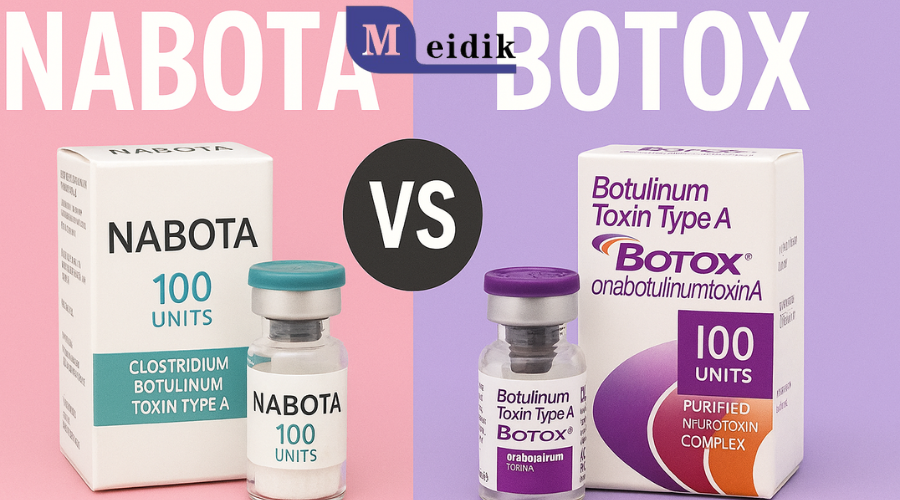
People want to look younger, even after their youthful days. It is possible to extend the process with the help of exercise, a healthy diet, and a few cosmetic treatments. Botulinum toxin is one of the popular choices of cosmetologists and medical aestheticians in this case. They inject these vials into the face to enhance a person's appearance. For this reason, many people are turning to this cosmetic method. With numerous brands available in the market, we compare Nabota vs Botox. Before you go for a deep comparison, here is a brief intro about the botulinum toxin. It will help you understand the differences between Nabota and Botox better. How Does Botulinum Toxin Work and Why is It so Popular? It is a safe toxin that paralyzes the muscles in a controlled manner to provide the desired benefits. Botulinum toxin breaks the connection between nerves and the dermal layer to reduce the aging lines. Once it is injected into the targeted spot of the face, the aging lines in the injected area stop appearing for a specific time. We are going to compare two famous brands that are common in cosmetology and the medical aesthetic field. Nabota (prabotulinumtoxinA) Botox (onabotulinumtoxinA) They offer muscle relaxation and wrinkle reduction. People all over the world get these injections either for cosmetic or medical purposes. Let’s find the differences between Nabota and Botox, and see what they offer. Manufacturing Companies The manufacturing companies belong to different countries and are located in entirely different regions. It is like the West and East. One is an American brand and the other is a South Korean brand. If we look at the medical cosmetic industry, both countries have significant strengths in this industry. Nabota is the product of Daewoong Pharmaceutical, which is a South Korean company. This brand of botulinum vials is famous not only in Asia but also in other continents, especially in North America. Then we have Botox, which is a product of Botox Cosmetics, a subsidiary of Allergan Aesthetics. It is a US company that has a strong hold in North America and is also famous in the European medical cosmetic industry. How Do They Work? If we look at the core functions of both types, they perform in the same way. They block acetylcholine release to relax muscles and reduce wrinkles. This is the ultimate purpose of both botulinum vials. What they do is bind with the receptors and break the connection between the muscles and nerve cells. Then the muscles stop contracting, which leads to a reduction in various types of aging lines. However, there are a few minor differences between them. Botox Botox reduces crow’s feet, frown lines, and forehead lines. Besides, it also treats bunny lines, marionette lines, nasolabial folds, dimples, and a gummy smile. This single vial can benefit from hiding lots of types of aging lines. Moreover, it treats medical problems like chronic migraine, facial and limb spasticity, and cervical dystonia. Doctors use this toxin to relax the muscular issues that are caused by stroke, stress, accidents, and trauma. Nabota Nabota focuses on reducing glabellar lines, fine lines, crow’s feet, forehead lines, and frown lines. It is efficient in hiding these aging lines to make the facial appearance youthful. Besides, it helps in treating blepharospasm, foot deformity in pediatric cerebral palsy, upper limb spasticity, and urinary incontinence. Also, it treats cervical dystonia, strabismus (crossed eyes), and hyperhidrosis (excessive sweating). Estimated Time of Showing Results Nabota starts showing results within 2 to 3 days, but the best results appear after a week. On the other hand, Botox takes 4 to 7 days, but the best results may take up to 14 days. The reason they last a week on average to show results is that the human body takes time to accept a foreign chemical. The nerve system takes time to react, especially when it comes to relaxing them from contraction. How Long Do They Last? When it comes to the results, it all depends on various factors. Each individual has different body reactions to chemicals like botulinum toxins. This is why both Nabota and Botox last from 3 to 4 months. Some may last up to months, which depends on diet, living conditions, and again, body response. Clinical Efficacy, Side Effects, and Safety When we compare their clinical efficacy levels, they are both similar. None is better than the other in terms of efficacy level. However, their side effects may differ slightly in nature. Patients could experience fever, flu-like symptoms, bruises, or swelling at the injection site on the body and face. Also, some patients may experience other symptoms depending on their body's reaction. What every patient has to be careful with is their medical condition. Before having medical cosmetic treatment, whether it is with Botox or Nabota, patients need to provide their medical history to their certified medical professional who will inject vials. Patients who have skin allergies or are pregnant need to be careful in this case. Their doctors might not allow this cosmetic treatment because of the risk involved for such patients. What About Their Regulatory Approvals? Both types of botulinum toxins, Botox and Nabota, are certified products. This is why they pass regulatory approvals from the FDA and similar bodies. Since Botox is a US-based product, it finds it easy to dominate the US market. Still, Nabota stays close in the competition by qualifying for every quality approval in the US and the rest of the regions. Dosing, Cost, and Formulation Both are available in equal doses, such as 100 units, which provide similar results to doctors. Even their formulations are similar, which meet the patients’ requirements for the best results. When we come to the cost section, Nabota is a more cost-effective option. The difference is in price, where Botox is a premium product in the botulinum toxin market. Expectation and Satisfaction Level In overall comparison, Nabota has the lead. Since the performance and regulatory compliance are similar in both, the cost makes the biggest difference. Nabota is way more cost-effective, which means doctors can get similar results at a lower price. Also, Nabota has slightly better performance in reducing glabellar lines. In contrast, Botox is better at reducing dynamic wrinkles. If we look at the US market, Botox has high demand because it is a US-based product. Unless patients look for a cost-effective way, they prefer Botox. Comparison Table Feature Nabota Botox Origin Daewoong Pharmaceutical (Korea) Allergan Aesthetics (USA) Onset 2 to 3 days 4 to 7 days Duration 3 to 6 months 3 to 6 months Safety/Efficacy Safe and efficient Safe and efficient Cost Low Premium price Conclusion Only a medical expert, like a certified medical aesthetician and cosmetologist, is best equipped to understand botulinum toxins. However, a general comparison can give patients a slight idea about the performance and cost of both types: Botox and Nabota. Since both are similar in performance and safety level, the only substantial difference between them is their cost. Nabota is a cost-effective choice for doctors who want similar results at a lower price. FAQs What is the main difference between Nabota and Botox? The difference is in origin and cost. Nabota is a South Korean brand, and Botox is an American brand. In comparison, Nabota is a more budget-friendly choice for doctors. How quickly will I notice results from each? Both will start showing results within 3 to 7 days. After 10 days, you will probably get the full results. Are there any unique side effects to watch for with Nabota? Usually, all types of botulinum toxin have some side effects. If we discuss Nabota’s side effects, they may be redness, swelling, headache, irritation, nausea, and vomiting. Again, different patients may experience other side effects depending on their body’s response and lifestyle. Is one safer than the other? Both are similar because they are both certified vials. Botox and Nabota vials meet the safety regulations of the FDA and comparable regulatory bodies. However, Botox has gained more trust in the US because it is a local brand.
View Details
When it comes to relaxing chronic involuntary muscle movement, doctors need botulinum toxins. Not only that, but they are also very common in medical aesthetics for treating wrinkles and similar issues. Both therapeutic and medical aesthetic treatments rely on botulinum toxins for desired results. They are good at wrinkle treatment, smile correction, glabellar lines reduction, and hiding crow’s feet. Besides, muscle spasm, overactive bladder, excessive sweating, chronic migraine, and neck problems can be treated. Doctors and medical aestheticians use this chemical to relax muscles temporarily. Once that period is over, the treatment is renewed. If you are looking to source them, here are the online suppliers of botulinum toxins, also known as Botox, that supply in the US. List Of Suppliers for Authentic Botox in USA Medical Spa RX The list begins with Medical Spa RX, a US-based supplier of botulinum toxin. Many renowned brands are available, which you can select in various quantities. Since it offers wholesale prices, you can get them by placing large orders. The larger the order is, the higher the discount will be. Their order placement process is slightly different from others. You need to register first, and then you will get a response from their team. If you want supplies in the US, they can dispatch those orders easily. What you need to know is that Medical Spa RX only supplies to licensed medical professionals. Medical doctors, assistants, dentists, veterinary doctors, nurses, and all licensed professionals can purchase from this platform. They primarily offer US brands of botulinum toxin vials. Additionally, only authentic brands are available on this platform. Individuals and medical corporations can contact them to place orders. Filler Cloud Then the second one is Filler Cloud. It is another US-based supplier that has various types of botulinum toxin vials. You will find multiple brands and units on this platform to suit your specific needs and applications. Since this supplier only deals with licensed medical professionals, you must meet this requirement before placing the order. There are around six different brands available, each with a range of units. 50U, 100U, 200U, 500U, and 1000U are available if you explore. You can source these vials from Filler Cloud, as this supplier offers global shipping. Whether you need supplies in the US or any other region of the world, the supply is extensive. Then comes the pricing, and you will find progressive discounts. Discounts will increase as the number of buying units increases. Lastly, Filler Cloud sells only to licensed medical professionals, which means you must have a license to procure. Shijiazhuang Meidik Technology Limited We also have a wholesale supplier that offers various brands of botulinum toxins. It is a China-based supplier with global service, which means you can also have delivery in the US. With multiple units, such as 100U and 200U, you will find a range of options on this platform. Mostly South Korean brands are available on this website, along with a few European brands. Since South Korean brands are also famous for botulinum toxin vials, you will find a wide variety to decide what suits your requirements. When sourcing botulinum toxins in bulk, you can be a medical professional, corporation, or even a retailer. This supplier offers wholesale rates to everyone. You can contact them to get details about the discounts, MOQs, and license details. MayLips MayLips is the next one, which is also a US-based supplier for deliveries in the US. It has botulinum toxin vials of American, European, and South Korean brands. The variety is extensive, which will help you make better decisions. It includes unit sizes that you can select based on your patients' needs. 100U, 200U, 300U, and 500U vials are available on MayLips. You can then explore their wholesale prices, which are offered to those who purchase in large quantities. Please note that only licensed medical professionals are permitted to buy from MayLips. They require a medical license when you proceed to order placement. Filler Supplies One of the renowned platforms for injectables, such as botulinum toxins, is Fillers Supplies. It is a Canada-based supplier offering a wide range of brands to its customers. The majority of the vials are from European and South Korean brands. Their units are available in 50U, 100U, 300U, and 500U, which seems to be quite sufficient. Since it also requires its buyers to have a license, you must have a license to place an order. Once you fulfill all the requirements, botulinum toxins will be available at discounted rates. These discounts are progressive, meaning the higher the quantity, the higher the discount will be. Their deliveries are available in Canada, the US, and many other regions of the world. Beauty Dermal Then the second last is Beauty Dermal. It is another Canadian-based supplier with numerous options available for you. Most botulinum toxins belong to European and Japanese brands on this website. It includes a range of units that you can select based on your patients' needs. Purchasing botulinum toxins in small quantities or bulk requires a prescription or a medical license. One must have any of these requirements to proceed with the order placement process. Only licensed medical professionals or individuals with a prescription can purchase from Beauty Dermal. Once a buyer has met all these requirements, they can take advantage of discounted prices. Larger orders lead to larger discounts on this website. Tradewheel.Com The last is Tradewheel.com, which is a global B2B platform. If a medical professional, retailer, or corporation wants to source botulinum toxins, this platform is also a good option. You will find various suppliers available who have botulinum toxins of American, European, and Asian brands. Additionally, you will find sizes ranging from 50U to 1000U on this platform. What makes this platform a suitable supplier for you is the global supply and wholesale rates available through it. All the suppliers available on it can supply in the US and also around the world. The wholesale rates here may be significantly lower than those offered by many other sources. The reason is the quantities they deal in. Conclusion Since you need a license or prescription to purchase botulinum toxins from these suppliers, you must obtain them first. Those licenses will allow you to proceed safely without any problem. Then you can compare these suppliers in terms of vial brands, sizes, types, and pricing. Once you finalize the supplier, you can go ahead.
View Details
Botox is considered the best treatment for wrinkles and fine lines. Neurotoxin injectables now have several rising options, including Botox and Xeomin. This blog will explain the basic characteristics of these products while providing comparative information. What are Liztox and Botulax? Botulinum toxin type A appears in both medications under their respective brand names of Liztox and Botulax. The active ingredient in Botox exists along with the same substance in both Botox and these lesser-known alternatives. The medicines deliver muscle paralysis to minimize wrinkles and facial fine lines through short-term effects. The cosmetic use of Botulinum toxin has existed for several decades. The administration of this drug through precise injections blocks neuronal signals that result in muscle relaxation at the target sites. When muscles relax under these actions, wrinkles on the skin's surface become less apparent. Origins and Manufacturers The main distinction between these products emerges from their manufacturing companies, together with their source of origin. ◼ Huons is a South Korean pharmaceutical production company that manufactures Liztox. South Korea approved Liztox in 2013, and the manufacturer has since expanded its market reach. ◼ Hugel Inc. is a South Korean pharmaceutical company that produces Botulax. The company approved this product in 2010 and continues to work to access international markets. The two products function as replacement options for Botox, which Allergan (currently operated by AbbVie) initially produced. In 2002, the United States approved Botox as the initial cosmetic botulinum toxin product. Formulation Differences Both Liztox and Botulax contain botulinum toxin type A as their active ingredients. Yet, they possess slight variations in their formulation makeup. These differences might include: ◼ The production of toxin requires a particular strain of Clostridium botulinum bacteria. ◼ The purification processes ◼ The active toxin requires surrounding proteins (complexing proteins) at specific concentrations. ◼ The stabilizers and other inactive ingredients in the formula Slight differences in manufacturing methods influence how the medication functions within the body when measuring onset time, duration, and spread from the injection point. Potency and Dosing The measurement methods for potency and suggested dosing between Liztox and Botulax differ significantly. Each Botulinum toxin product contains units as measurement units, yet these units remain non-uniform across various manufacturers' brands. When used in the body, each unit of Liztox produces dissimilar effects from each unit of Botulax. Medical providers who switch brands must understand the distinct dosing instructions of each product. A medical practitioner who works with one brand must adjust their unit count to match the desired effect when using a different brand. Clinical Evidence and Track Record These products show different levels of clinical data and practical usage records. ◼ The original Botox product has accumulated decades of clinical research and extensive usage data, which has generated deep knowledge about its effectiveness and safety. ◼ Liztox and Botulax hold less clinical data than Botox because they entered the market after it. The products conducted clinical research and proved their safety and treatment outcomes through trials, leading to market approvals in their domestic territories. Healthcare practitioners base their product selection for patient treatment on the extent of research studies alongside the products' established track record. Regulatory Approval Status These products maintain different levels of regulatory approval in various countries. ◼ Botox holds medical and cosmetic approvals in more than 90 nations worldwide. Cosmetic procedures have utilized this product for several decades, while patients widely endorse it. ◼ Liztox and Botulax's pharmaceutical products maintain regulatory authorization in South Korea and select Asian countries. The companies have attempted global market expansion for Liztox and Botulax, yet Botox remains the brand with worldwide recognition. Doctors in countries without official product approvals utilize legally accessible drugs for treatment that exceeds regulatory authorization boundaries. Cost Differences The high price of Botox serves as a primary motivation for people to consider selecting Liztox and Botulax. ◼ Botox is the original and most famous brand, and it demands higher prices in the market. Treatment costs become expensive because patients must undergo procedures repeatedly every few months to preserve their outcomes. ◼ The pharmaceutical companies created Liztox and Botulax to establish budget-friendly alternatives to Botox. Liztox and Botulax reduce costs below Botox prices, thus expanding the market access for aesthetic procedures to more individuals. The price variation between treatments depends on location and provider. Yet, the cost reduction becomes substantial for patients who need routine procedures. Treatment Experience and Results Patients and practitioners detect certain subtle variations between the treatment experience and results. Different brands of these products show minor variations in their: ◼ Treatment products demonstrate different onset times that represent their speed to become active. ◼ The duration of therapeutic effects represents one way to measure the longevity of results. ◼ The rate at which the product disperses away from its injection site constitutes diffusion patterns. ◼ Pain or discomfort during injection The results achieved through the correct administration of Liztox, Botulax, and Botox show comparable effects for most patients. Proper administration by knowledgeable practitioners can yield effective wrinkle reduction through any of the three products. Side Effects and Safety All formulations of botulinum toxin share common side effects, including: ◼ One may notice bruises alongside pain or swelling when an injection occurs. ◼ Headache ◼ Temporary drooping of eyelids or eyebrows ◼ Flu-like symptoms ◼ Dry mouth or eyes ◼ Unwanted weakness in nearby muscles Botulinum toxin injection can cause side effects, depending on the technician's skill and the patient's reaction, not the brand used. Some practitioners claim to notice slight variations in side effects between brands, possibly because of the formulation differences already discussed. Choosing Between Liztox and Botulax When deciding between botulinum toxin treatments, which would you prefer, Liztox or Botulax? ◼ The primary consideration must be selecting a knowledgeable medical professional with expertise in administering the chosen product. Professional skill levels demonstrate a more significant impact than the particular brand selection of your treatment provider. ◼ If cost is your primary consideration, ask your treatment provider to share a price comparison for different options. The monetary advantages might justify picking a less popular but cheaper brand. ◼ The human body sometimes reacts differently toward different variants of botulinum toxin. You should test a different brand if you found the initial product unsatisfactory or side effects occurred after its use. Beyond the Brand Names The three major brand names, Liztox, Botulax, and Botox, contain botulinum toxin type A after purification. These brands produce noticeable distinctions, although they remain minor compared to the complete change of treatment methods, such as dermal fillers or laser treatments. People often value other factors over deciding which particular brand to choose. ◼ The search for an experienced provider who demonstrates good aesthetic sense ◼ Patients must understand what botulinum toxin treatments can achieve and their boundaries. ◼ Following proper aftercare instructions ◼ Maintaining realistic expectations about results The Global Market for Botulinum Toxin Products Botulinum toxin products continue to experience steady growth in their worldwide market. Botox maintained its position as market leader throughout many years before competing products like Lysotocin and Botulax entered the field. Alternative product entries into the market offer multiple advantages to the consumer base: ◼ The lower price point of available options allows more people to access treatment programs. ◼ The market competition leads to better innovations and enhancements across all products. ◼ People who seek treatment and their healthcare providers now have expanded options to discover suitable products that best meet their needs. The evolving market will likely produce additional options that enhance product distinctions, providing medical staff and consumers with more selection possibilities. Conclusion The medical market features Liztox and Botulax as alternative solutions to Botox due to their composition of botulinum toxin type A. The identical active component exists in both products. Still, each brand comes from different manufacturers with unique formulations that receive different regulatory approvals and price points. Most patients will experience minimal variations between these products. In contrast, the experience level of their practitioner becomes more important than which particular brand they receive. The choice between different botulinum toxin products depends on the price and how individuals react to each formulation. You should consult with your healthcare provider regarding every botulinum toxin treatment option. Your provider can assess which product best serves your needs by considering price, treatment objectives, and prior treatment experiences.
View Details
If you're starting or expanding a beauty enhancement business—lash extension services, brow treatments, skincare, or cosmetic products—yesterday, you probably asked: Should I wholesale products or develop my own private-label range? Both models can be profitable, but each has pros and cons. The best option, however, depends on your goals, budget, brand vision, and desire for control over your products. Let's break it down to help make a good, informed decision. What is Wholesale? So, wholesale refers to selling finished goods purchased from an established brand at discounted prices for resale. In this case, the product is not modified, no rebranding is done, and it is sold in your salon/clinic/spa/online store. Advantages of Wholesale 1. Easier to Get Into Formulate, manufacture, or brand nothing. Purchase, stock, and sell. 2. Reputation You provide products with a reputation, a loyal consumer base, and proven results. 3. Fast Setup With the right beauty product supplier, you'll have the inventory ready to sell in days. 4. Low Initial Investment You do not have to pay for product development, custom packages, or minimum manufacturing runs. 5. Customer Trust People are more comfortable buying products they recognize and trust, especially when it comes to their skin or appearance. Cons of Wholesale Lower Margins Your per-unit profit margin is smaller when selling from wholesale to a private-label product, and the brand already takes its cut. No Branding Control You're promoting someone else's brand, not yours—reduced brand equity for your business. Competitor Overlap Other beauty pros might carry the same products, so you lose that exclusivity. What is Private Label? Private Label refers to collaborating with a manufacturer to produce goods branded under one's business name. You can select the formula (from a ready-made base or custom blend), packaging, logo, and messaging. Therefore, you would hold the brand identity, even though you are not making the product yourself. Advantages of Private Label Stronger Branding You're expanding your product line, which will further boost customer loyalty and create long-term brand value. Increased Profit Margins Since you control pricing and branding, your markup can thus be much steeper. An Exclusivity Factor Other shops out in the market would never sell the same products as yours. Hence, that uniqueness sets you apart from others. Scalability A successful private label can develop into its own brand, get distribution in retailers, or even be licensed. Fine-Tuned Products to Your Audience You can customize your products to fit your clientele's needs, design, and value system- clean beauty, performance skincare, trendy lash tools- whatever it may be. Cons of Private Label Higher Initial Investment Cost Most manufacturers demand minimum order quantities (MOQs), custom packaging, and design fees. Longer Lead Times Making and receiving private-label goods might take many weeks or months. Higher Risk You will assume additional financial risk if the product does not sell or requires reformulation. More Work Branding, label compliance, marketing strategy, and even customer education. Which is Better: Wholesale or Private Label Case 1: Launching a Startup If starting your beauty business with retail-ready products and limited capital is a requirement, wholesale would be the safest bet. This way, you can try out different product categories, learn what your customers want, and avoid high upfront costs. Then, once your client base is built and you know what sells, you will be set up to launch a private-label line that speaks uniquely to your audience. Case 2: You Want to Build A Brand Go Private Label: Private Label would be the best option if you aim to create a beauty brand with a following beyond your salon. Customers will request it by name. You will control how the products look, feel, and diffuse into your clients. It is a more involved commitment, but it builds serious equity for your brand over time. Case 3: Your Aim is Flexibility with Low Inventory Wholesale is better Private Label, at times, may need you to buy in bulk and commit to packaging and formulas upfront. Wholesalers let you buy only what you need for now, stretching your cash flow if you are unprepared to store and manage inventory. Case 4: You Have An Established Brand with Long-term Clients Private Label could change everything. If your clients already trust your judgment on beauty matters, you've done the most challenging part: gaining credibility. Going private Label allows you to offer products that represent your distinctive style and standards, and the likelihood of clients buying them because they trust you is very high. Tips on Choosing the Right Partner Regardless of whether you go wholesale or private Label, the supplier matters. A reliable supplier like MeidiBeauty will have: 🔹 Consistent product quality 🔹 Reasonable MOQs and flexible pricing 🔹 Reliable shipping and fulfillment 🔹 Good communication and support 🔹 Compliance with industry regulations (especially for skincare and cosmetics) For private-label, look for suppliers that offer in-house design, formulation support, and low-volume startup options. Conclusion There is no set answer. Wholesale and private Label can stand independently in the beauty enhancement domain. The best model for you will depend on your current stage, risk appetite, plans, and the time you want to devote to building your product line. 🔹 Want quick sales with the least risk? Wholesale. 🔹 Want to build your brand and add to profits in the long run? Private Label. And don't forget, you're not locked into either. Many successful beauty pros start with wholesale and then add private Label as they grow. In contrast, others use wholesale for trusted lines and private Labels for signature products. Whichever route you take, stay focused on providing quality, remain consistent, and understand what your clients want. That's the true recipe for success in the beauty business.
View Details